When investing in timber windows or doors, the quality of the material matters just as much as the craftsmanship. Accoya wood has become one of the most respected materials in the industry, particularly for high-performance sash windows. But what exactly is it, and why is it so widely specified?
Key Takeaways
- Accoya is modified radiata pine, transformed through acetylation to create an exceptionally durable and stable timber.
- It offers Class 1 durability with a lifespan of around 50 years above ground, making it ideal for long-lasting windows and doors.
- Accoya provides superior resistance to rot, moisture, and swelling, ensuring smooth operation and reduced maintenance for sash windows.
- As a sustainably sourced, FSC-certified, and non-toxic material, Accoya combines environmental responsibility with high performance.
What is Accoya Wood?
Accoya is a brand name rather than a tree species. It is produced from sustainably sourced radiata pine that has undergone a highly specialised modification process known as acetylation. This treatment transforms a fast-growing softwood into an exceptionally durable, stable, and long-lasting material, ideally suited to the British climate.
Every sash window from Woodcock Sash Windows is manufactured from Accoya at our workshop in Chertsey, Surrey. We use it because it offers outstanding longevity, minimal maintenance requirements, and superb environmental credentials.

Origins of Accoya Wood
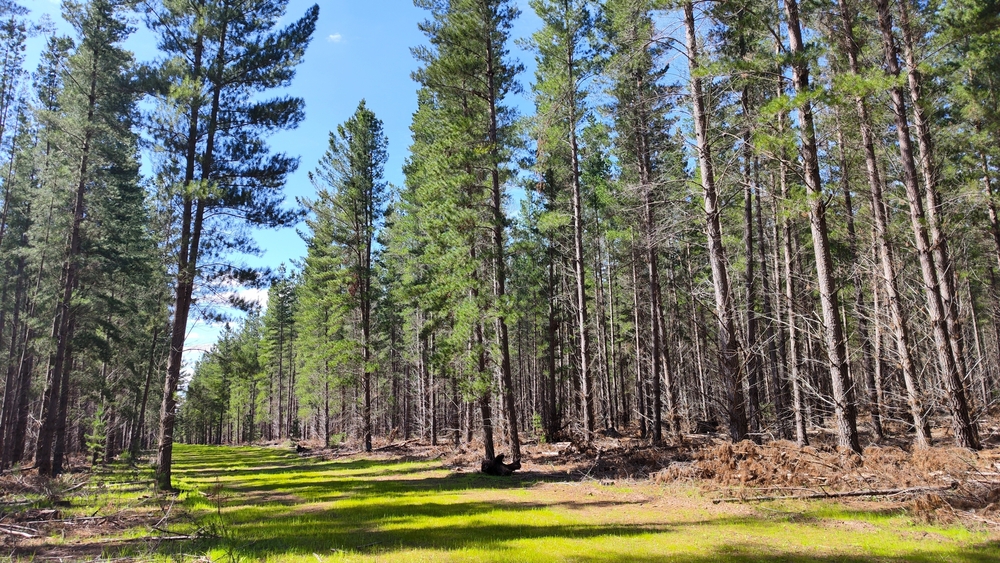
Accoya begins life as radiata pine, also known as insignis pine or Monterey pine. Its scientific name is Pinus radiata. Although native to parts of Mexico and California, today it is primarily grown in sustainable plantations in New Zealand, Australia, and Chile.
The use of plantation grown timber is important. Radiata pine grows quickly and can be replanted efficiently, making it a renewable and responsibly managed resource.
| Feature | Details |
|---|---|
| Tree species | Radiata pine |
| Scientific name | Pinus radiata |
| Native regions | Mexico and California |
| Main growing regions today | New Zealand, Australia, Chile |
| Growth rate | Fast-growing plantation timber |
| Certification | FSC certified sources |
The speed at which radiata pine matures means harvested trees can be replaced quickly, reducing pressure on slow-growing hardwood forests.
How Is Accoya Made?
Once harvested, the raw timber is transported to production facilities in the Netherlands. There, it undergoes a process called acetylation.
What Is Acetylation?
Acetylation is a modification process that alters the wood at a cellular level. Rather than applying a surface treatment, the structure of the timber itself is changed. During this process:
- The wood is treated with acetic anhydride.
- The cell walls are permanently modified.
- The timber becomes far less able to absorb water.
- Stability and durability are significantly enhanced.
Crucially, no toxic chemicals remain in the finished product. The process does not coat the wood – it transforms it from within.
Why Acetylation Makes Such a Difference
Untreated softwood naturally absorbs moisture from the air. This leads to swelling in damp conditions and shrinking when it dries. Over time, this movement can cause distortion, cracking, and rot. Accoya behaves very differently:
| Property | Untreated Softwood | Accoya Wood |
|---|---|---|
| Water absorption | High | Extremely low |
| Swelling and shrinking | Significant | Up to 75% less |
| Paint adhesion | Moderate | Excellent |
| Resistance to rot | Limited | Class 1 durability |
By reducing the wood’s ability to absorb water, acetylation dramatically improves stability. This is particularly important for sash windows, which must move smoothly within their frames throughout the year.
How Durable Is Accoya Wood?
Accoya achieves Class 1 durability, the highest rating available for timber. In practical terms, this means:
- A service life of around 50 years above ground.
- Around 25 years in ground or freshwater contact.
- Exceptional resistance to fungal decay.
For homes across the UK that are exposed to rain, frost, and fluctuating temperatures, this level of performance is invaluable.
Resistance to Rot, Moisture, and Insects
Timber windows are constantly exposed to the elements. Moisture is typically the main cause of failure in traditional wooden frames. Accoya’s resistance offers several key advantages:
- Highly resistant to rot and fungal decay.
- Resistant to insect attack.
- Performs well in damp and coastal environments.
- Maintains structural integrity over decades.
This longevity reduces the need for premature replacements and repairs.
Is Accoya Wood Sustainable?
Sustainability is increasingly important to homeowners seeking environmentally responsible solutions. Accoya offers strong credentials in this area:
- Made from fast-growing plantation timber.
- FSC certified sourcing.
- Non-toxic modification process.
- Long lifespan reduces material waste.
- Fully recyclable at the end of life.
Because Accoya lasts so much longer than untreated softwood, fewer resources are required over time. Longevity is itself a form of sustainability.
Why Is Accoya Ideal for Sash Windows?
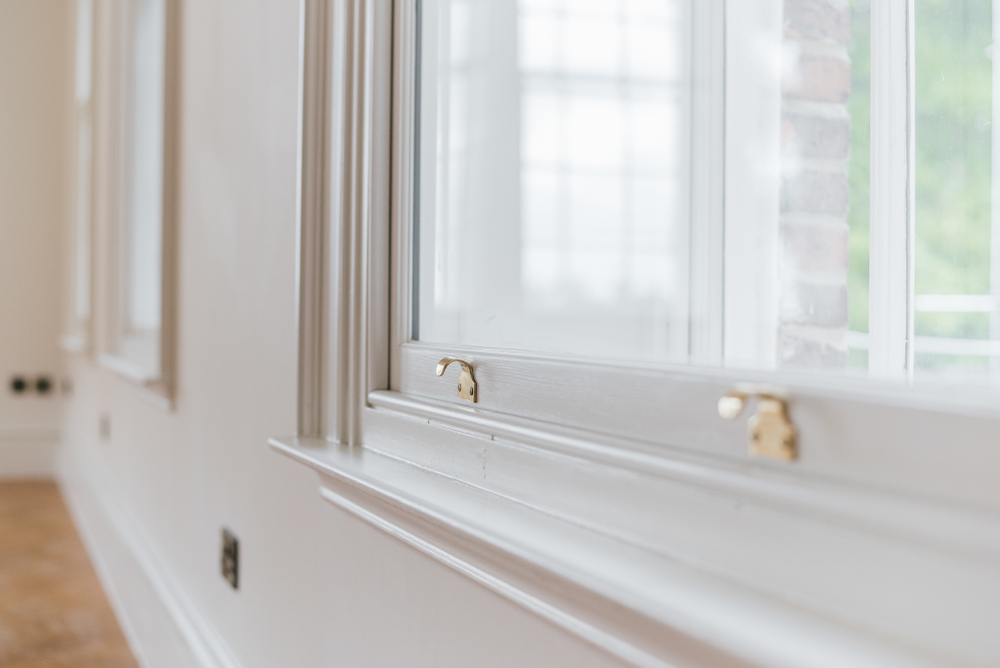
Sash windows require precision engineering. Timber movement, swelling, and warping can affect operation and draught performance.
1. Stability in All Seasons
Accoya swells and shrinks up to 75% less than traditional softwoods. This means:
- Sashes glide more smoothly.
- Frames are less likely to bind.
- Draught proofing remains effective.
- Paint finishes last longer.
In the varied UK climate, this stability ensures reliable performance year-round.
2. Minimal Maintenance Requirements
Timber windows must be maintained to preserve their appearance and weather resistance. Accoya reduces this burden significantly.
| Maintenance Factor | Standard Softwood | Accoya |
|---|---|---|
| Repainting frequency | More frequent | Significantly reduced |
| Risk of flaking | Higher | Lower |
| Surface cracking | More common | Rare |
| Long-term cost | Higher | Lower over the lifespan |
Because the grain remains stable and the surface coatings adhere better, repainting intervals are extended. This saves both time and money over the lifetime of the window.
Read: What Is the Maintenance Involved in Sash Windows?
3. Thermal Insulation
Timber is a natural insulator, and Accoya performs particularly well. Its cellular modification improves thermal performance, helping to:
- Reduce heat loss.
- Improve overall window efficiency.
- Support lower energy bills.
When combined with high-performance glazing, Accoya sash windows contribute to a warmer and more comfortable home.
4. Natural Appearance and Finish
Beyond performance, appearance matters. Accoya offers:
- A clean and consistent grain.
- Excellent paint retention.
- A premium finish suitable for period properties.
- Long-lasting aesthetic appeal.
For heritage and conservation homes, it provides traditional character with modern performance standards.
Read: Benefits of Accoya Wood for Doors & Windows
How Long Does Accoya Wood Last?
One of the most common questions is about lifespan. In above-ground applications such as windows and doors, Accoya can last around 50 years. This makes it one of the longest-lasting timber options available.
Is Accoya Safe and Non-Toxic?
Despite undergoing a chemical modification process, Accoya is completely non-toxic once finished.
- No harmful chemicals remain in the timber.
- Safe for homes with children and pets.
- No toxic leaching over time.
- Environmentally responsible production.
The acetylation process permanently changes the wood’s structure without leaving hazardous residues.
Frequently Asked Questions About Accoya Wood
What is Accoya wood made from?
Accoya is made from sustainably sourced radiata pine that has been modified using acetylation to improve durability and stability.
How long does Accoya last?
It can last around 50 years above ground when properly manufactured and maintained.
Is Accoya waterproof?
While not waterproof in the literal sense, it is highly resistant to moisture absorption and rot.
Does Accoya require maintenance?
Yes, but significantly less than traditional softwoods. Paint coatings last longer due to its stability.
Is Accoya environmentally friendly?
Yes. It is made from fast-growing plantation timber, is FSC certified, non-toxic, and has a long service life.
Why We Use Accoya at Woodcock Sash Windows
Quality and longevity are central to everything we do. With 20 years of experience crafting bespoke timber windows and doors, we carefully select materials that meet our exacting standards. We choose Accoya because it delivers:
- Outstanding durability.
- Exceptional dimensional stability.
- Reduced maintenance for homeowners.
- Strong environmental credentials.
- A beautiful finish suited to both modern and period properties.
All of our sash windows are manufactured in our Chertsey workshop. This allows us to produce high performance Sash Windows in Surrey and beautifully detailed Box Sash Windows in London, tailored to suit both period and contemporary homes.
By combining expert craftsmanship with one of the most advanced timbers available, we ensure every installation enhances your home with precision and lasting quality.
Ready to transform your home? Request your free quotation from our friendly team today to get started.